How to Optimize Account Security and Access Control Through Effective Account Management and Settings to Prevent Suspension
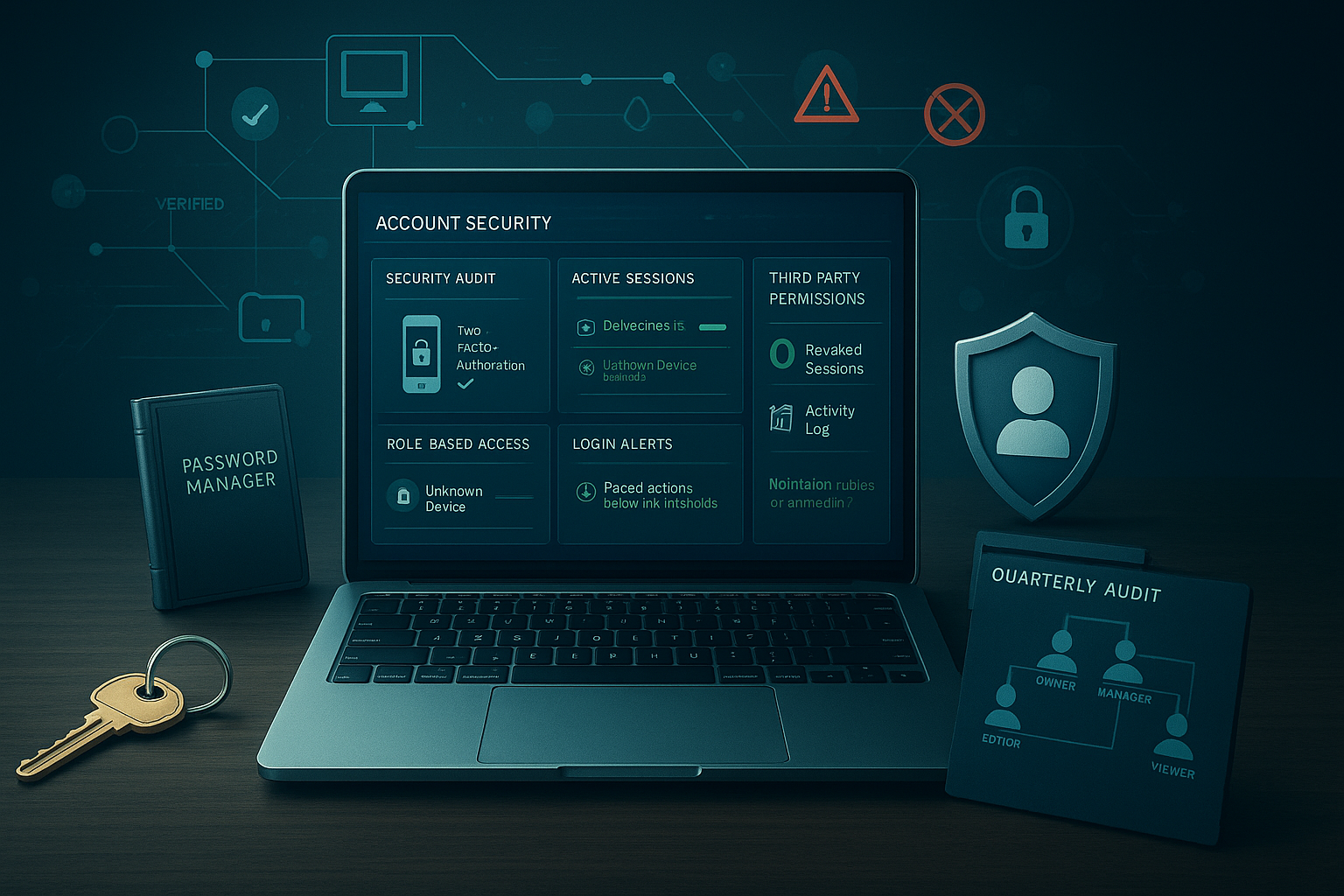
Most account suspensions are not the result of deliberate wrongdoing. They are the result of neglect. A password that was never changed, a third-party app that was connected years ago and forgotten, a team member who left the organization but retained full access - these are the conditions under which accounts get flagged, restricted, and ultimately suspended. The frustrating part is that none of it had to happen.
Effective account management is less about reacting to problems and more about building conditions where problems are unlikely to arise. When account settings are properly configured and kept current, when access control is applied with discipline, and when behavioral patterns stay within what platforms consider normal, the risk of suspension drops considerably. Platforms that facilitate structured account oversight - such as accs - reflect a growing recognition that managing accounts systematically, rather than casually, is what separates accounts that stay active from those that don't.
This guide covers the full scope of what it takes to protect an account from suspension: from conducting a meaningful security audit, to configuring settings that reduce automated flags, to implementing access control across teams, to recovering correctly when suspension does occur. Whether you manage one account or many, the principles here apply - and the cost of ignoring them is almost always higher than the effort of applying them.
Understanding the Link Between Account Management and Suspension Risk
Account suspension rarely arrives without a trail of warning signs that went unnoticed or unaddressed. Understanding why that trail exists in the first place requires a clear-eyed look at how platforms evaluate the accounts operating on their infrastructure.
Every platform that hosts user accounts has an interest in keeping its environment clean, functional, and trustworthy. To protect that environment, platforms deploy automated systems that continuously evaluate account behavior - not just what an account does, but how it does it, how consistently, and whether the pattern matches what legitimate users typically look like. These systems do not read intentions. They read signals.
Account management, in this context, means every deliberate decision made about how an account is configured and operated. It includes the credentials used to access the account, the devices and locations from which access occurs, the permissions granted to external tools and team members, and the cadence of activity performed. Each of these elements generates a signal. When those signals cluster into patterns that the platform's detection systems associate with risk - spam, fraud, unauthorized access, policy abuse - the account gets flagged.
The critical insight here is that poor account management and malicious behavior can produce identical signals. An account accessed from five different IP addresses in a single afternoon might belong to a traveler, a distributed team, or an attacker. The platform's system cannot tell the difference without additional context. If the account has not been configured to provide that context - through verified devices, consistent authentication methods, and coherent activity history - it gets treated as a risk.
- Sudden login location changes that platforms interpret as unauthorized access attempts
- Rapid sequences of high-volume actions that resemble automated spam behavior
- Outdated or weak credentials that invite unauthorized logins from external parties
- Forgotten third-party app connections operating beyond their intended scope
- Activity spikes that deviate sharply from an account's established behavioral baseline
This is why account security and suspension prevention cannot be treated as separate concerns. They are expressions of the same underlying practice: maintaining an account in a state that platforms recognize as legitimate, stable, and trustworthy.
Conducting a Full Account Security Audit
Before any meaningful improvement can be made to an account's security posture, you need an accurate picture of where things currently stand. Most accounts that have been active for more than a year carry hidden vulnerabilities - not from breaches, but from accumulated neglect. A structured security audit surfaces those vulnerabilities before a platform's detection systems do.
Reviewing Login Credentials and Authentication Methods
The authentication layer is where most account compromises begin. Weak or reused passwords remain the most exploitable vulnerability in account security, and yet they are also the easiest to fix. A compromised login - whether from a credential leak on another platform or from a brute-force attempt - not only exposes account data but generates the kind of suspicious login activity that triggers suspension alerts.
Start by evaluating the strength and uniqueness of the current password. If it has not been changed in more than a year, change it now. If it is shared with any other account, it needs to be replaced immediately with something unique. Password managers make this manageable at scale without requiring anyone to memorize complex strings.
Beyond passwords, review the authentication methods available and currently enabled. Two-factor authentication (2FA) adds a meaningful layer of protection, but not all 2FA methods are equivalent. Authentication apps generate time-based codes locally and are more resistant to interception than SMS-based codes, which can be vulnerable to SIM-swapping attacks. Where the platform supports it, an authenticator app should be the default choice.
- Open the account's security settings and locate the authentication section
- Review when the current password was last changed and assess its strength
- Replace weak or reused passwords with unique, complex alternatives
- Enable 2FA if not already active; upgrade from SMS to an authenticator app where possible
- Verify that recovery email addresses and phone numbers are current and accessible
- Generate and securely store backup codes in case primary 2FA access is lost
Identifying Active Sessions and Trusted Devices
Active sessions represent every currently authenticated connection to an account. Many accounts have sessions open from devices that were used once - a borrowed laptop, an old phone, a browser at a former workplace - and never formally logged out. Each of those sessions is a live access point. If any one of them is ever accessed by someone else, the account will show login activity from an unrecognized source, which is a standard suspension trigger.
Most platforms display active sessions within the security panel of account settings, typically showing device type, approximate location, and the time of last activity. Reviewing this list carefully and terminating any session that is unfamiliar, outdated, or unrecognized is a basic but essential step. After revoking suspicious sessions, changing the account password ensures that any previously authenticated session cannot reestablish access.
| Session Detail | What to Check | Action if Suspicious |
|---|---|---|
| Device type | Does it match a device you currently use or have used? | Revoke the session immediately |
| Geographic location | Is the location consistent with your activity? | Revoke the session and change password |
| Last active timestamp | Is the timing consistent with your usage patterns? | Investigate; revoke if unexplained |
| Browser or application | Is it a browser or app you recognize and use? | Revoke and enable 2FA if not yet active |
Auditing Third-Party App Permissions
Connected applications accumulate silently. Scheduling tools, analytics integrations, automation platforms, and API-based services all request access to an account at the point of connection - and that access persists indefinitely unless explicitly revoked. An app that was useful eighteen months ago and is now defunct, rebranded, or simply no longer in use still holds active permissions to read from or write to the account.
The risk here is twofold. First, a compromised or poorly maintained third-party app can generate account activity that looks suspicious without the account owner doing anything. Second, platforms periodically review accounts for connections to unauthorized or policy-violating tools, and having such a connection - even an inactive one - can trigger a review.
Auditing third-party permissions means visiting the connected apps section of account settings and evaluating each entry on its current merit, not its historical usefulness.
- List all currently connected applications and the access level each holds
- Identify any app that has not been actively used in the past 60 to 90 days
- Assess whether each app's requested permissions match its stated function
- Revoke access for any app that is outdated, redundant, or unrecognized
- Re-authorize only the apps still in active use, confirming their permission scope is appropriate
Configuring Account Settings to Minimize Suspension Risk
A security audit tells you where things stand. Configuring account settings correctly determines where things go from here. The settings available within most platforms are more consequential than most users realize - they directly shape how the platform perceives the account and how quickly anomalies are detected and reported.
Privacy and Visibility Settings
Privacy settings are often treated as a personal preference rather than a security consideration. That framing underestimates their importance. Overly permissive visibility settings expose an account to mass interactions from unknown sources - unsolicited messages, follows from bot networks, or engagement from accounts that platforms are actively monitoring. When an account accumulates interactions from flagged sources, it can be drawn into a suspension sweep even if it did nothing to invite that attention.
For business accounts, the goal is targeted visibility: accessible to the intended audience, but not open to indiscriminate interaction. For personal accounts, tighter controls reduce the surface area for impersonation attempts and unsolicited contact. In both cases, reviewing what is publicly visible - profile details, contact information, activity history - and limiting it to what is genuinely necessary serves both security and suspension prevention.
Notification and Alert Settings
Security notifications are the platform's way of communicating with the account owner in real time. When a new device logs in, when a password is changed, when a new app is connected, the platform sends an alert. These notifications are only useful if they reach someone who acts on them. An alert sent to a deprecated email address, or disabled entirely to reduce inbox noise, provides no protection at all.
Configuring notifications correctly means enabling alerts for all security-relevant events and routing them to a channel that is actively monitored. For shared or business accounts, this might mean routing critical alerts to a dedicated security inbox rather than a general communications address.
- Enable login alerts for access from new devices or unfamiliar locations
- Activate notifications for any changes to password or recovery contact details
- Turn on alerts for new third-party application connections
- Enable billing or payment notifications if the account has financial activity attached
- Send a test notification through each configured channel to confirm delivery
Activity Limits and Usage Guidelines
Platforms impose limits on how much activity an account can perform within a given time window. These limits exist to distinguish human behavior from automated abuse. Following too many accounts in an hour, sending identical messages in rapid succession, or publishing content at an unnatural frequency can all trigger automated restriction or suspension, regardless of whether the intent was benign.
The practical implication is that account activity - particularly for accounts that use scheduling tools or manage high-volume workflows - should be deliberately paced. Staying well below hard limits is not excessive caution; it is basic risk management. Most platforms do not publish their exact thresholds, but the general principle holds: distribute activity over time, avoid sudden spikes, and keep patterns consistent.
| Activity Type | General Risk Threshold | Suspension Risk if Exceeded | Recommended Approach |
|---|---|---|---|
| Follow or unfollow actions | Platform-specific daily caps | Temporary restriction or full suspension | Distribute actions across the day; stay under 60% of any stated limit |
| Direct or bulk messaging | Varies by platform and account age | Spam flag, messaging restriction | Space messages across sessions; avoid identical copy |
| API requests | Rate-limited per endpoint | API key revocation, account review | Implement request throttling in any connected tool |
| Content publishing | Varies by platform | Content removal, account flag | Maintain a consistent posting cadence rather than burst publishing |
Implementing Effective Access Control for Shared and Business Accounts
When more than one person accesses an account, the complexity of account security multiplies. Every additional user is an additional access point, and every access point that is not carefully managed is a potential source of the kind of anomalous activity that platforms treat as a warning sign. Access control is the practice of managing that complexity deliberately.
Role-Based Access and Permission Levels
Most business-oriented platforms provide role-based access control, allowing account owners to assign different permission levels to different users. The principle of least privilege is the right framework here: each user should have exactly the access they need to do their job, and nothing more. This is not about distrust - it is about limiting the consequences when any single account is compromised or misused.
An editor who needs to publish content does not need access to billing settings. An analyst who reviews performance data does not need write permissions. Assigning roles based on actual job function, rather than convenience or seniority, creates a permission structure that is both more secure and easier to audit.
| Role | Typical Access Level | Appropriate For | Access to Security Settings |
|---|---|---|---|
| Owner or Administrator | Full access to all features and settings | Account owner only | Yes - full control |
| Manager | Broad operational access, limited admin functions | Senior team leads overseeing operations | Restricted - no credential or billing access |
| Editor or Contributor | Content creation and publishing access | Content creators and operators | No |
| Viewer or Analyst | Read-only access to data and reports | Reporting, auditing, or oversight roles | No |
Managing Team Member Access Over Time
Access management is a process, not a one-time configuration. Teams change. People move into different roles, take on new responsibilities, or leave the organization entirely. When access permissions are not updated to reflect those changes, the result is a growing list of orphaned permissions - active access points attached to people who should no longer have them.
This is one of the most common and preventable sources of account compromise. A former employee who retains access to a shared account - even without malicious intent - represents an uncontrolled variable. Any activity they generate, or any compromise of their own credentials, immediately becomes the account's problem.
- Schedule a formal access review at least once per quarter for all shared accounts
- Include account access revocation as a mandatory step in any offboarding process
- Review activity logs periodically to identify dormant accounts that should be deactivated
- Confirm that access levels still match each team member's current role at every review
Avoiding Credential Sharing and Its Risks
Sharing login credentials directly - sending a username and password through a messaging app, email thread, or shared document - bypasses every native access control a platform offers. It makes individual activity impossible to attribute, creates a permanent security liability wherever those credentials are stored, and on many platforms, constitutes a terms of service violation that can itself lead to account suspension.
Wherever a platform provides team access features, those features should be used without exception. They exist precisely to eliminate the need for credential sharing. Where native features fall short, a dedicated password manager with controlled sharing capabilities provides a safer path than passing credentials through uncontrolled channels. The distinction matters not just for security, but because platforms that detect simultaneous logins from different locations under the same credentials will often treat the account as compromised - triggering exactly the kind of automated suspension that good access control is meant to prevent.
Recognizing and Avoiding Behaviors That Trigger Account Suspension
Understanding the mechanics of suspension is more useful than fearing it. Platforms suspend accounts through a combination of automated behavioral detection and, less frequently, manual review. Each operates on different timelines and responds to different types of evidence. Knowing which is which shapes how you both avoid suspension and respond to it.
Automated Suspension Triggers
Automated systems evaluate account behavior against a model of what normal looks like. That model is built on population-level patterns: how accounts at similar maturity levels typically behave, what volume of activity falls within an expected range, and what sequences of actions are associated with abuse. When an account deviates significantly from the baseline, it gets flagged - not because a human reviewed it, but because the pattern matched a known risk profile.
The practical implication is that an account does not need to be doing anything wrong to get flagged. It needs to be doing something that looks wrong. Logging in from three different countries in a single day, rapidly connecting and disconnecting third-party apps, or publishing content at an unusually high rate after a long period of inactivity can all trigger automated alerts.
- High-volume actions executed in compressed time windows
- Simultaneous logins from geographically distant locations
- Use of automation tools that operate outside platform terms of service
- Multiple rapid changes to account details within a short period
- Interaction patterns inconsistent with the account's established history
- Regular engagement with known spam accounts or recently suspended profiles
Policy Violations That Lead to Suspension
Manual suspension follows policy violations: content that breaches community guidelines, conduct that is explicitly prohibited by terms of service, or patterns of behavior that a human reviewer determines to be abusive. Unlike automated flags, which are often reversible, manual suspensions tend to carry more weight and are harder to appeal successfully without substantive evidence of corrective action.
Platform policies are not static. They are updated regularly, sometimes significantly, in response to regulatory pressure, community feedback, or shifts in how platforms define acceptable use. An account management practice that was unremarkable two years ago may now constitute a clear violation. Following policy update announcements from platforms you depend on - and treating those updates as operational input rather than background noise - is a straightforward way to stay ahead of this risk.
The Role of Account History and Trust Score
Not all accounts are evaluated identically. An account with a long, uninterrupted history of consistent behavior carries more implicit credibility than a new account performing the same actions. Platforms weight behavioral signals against account context, and a well-established account has far more context working in its favor.
This means that trust is genuinely cumulative. An account that has maintained steady activity, kept its profile information current and verified, and avoided behavioral anomalies over an extended period will be treated with more leniency when it encounters an edge case - an unusual login, a temporary activity spike, or an isolated complaint. New accounts, by contrast, have none of that buffer. They face higher scrutiny for behaviors that older accounts perform without consequence, which is why launching new accounts at full operational volume is one of the most reliable ways to trigger an early suspension.
Responding to and Recovering from Account Suspension
Even accounts that are managed well can be suspended. Automated systems make mistakes, policies shift unexpectedly, and some triggers are difficult to anticipate in advance. What separates a recoverable suspension from a permanent one is often not what caused it, but how quickly and correctly it is addressed.
Diagnosing the Cause of Suspension
The first instinct when discovering a suspension is often to appeal immediately. That instinct is worth resisting. An appeal submitted before the cause is understood is an appeal that cannot be answered well. Taking the time to diagnose accurately - even if it takes a few hours - makes the subsequent appeal substantially more effective.
Most suspension notifications include a stated reason, though the language is often broad. Cross-referencing that stated reason with recent account activity, any changes made to settings in the preceding days, any new third-party tools connected, or any sharp deviation in activity volume usually narrows down the most probable cause. Whether the suspension originated from an automated behavioral flag or a manual review also matters: automated flags often resolve through standard appeal channels, while manual suspensions typically require a more detailed and evidence-supported response.
Submitting an Effective Appeal
A successful appeal does three things: it acknowledges what happened, it provides context that the platform's system could not see, and it demonstrates that the underlying issue has been resolved. Generic appeals that simply request reinstatement without addressing any of those elements are routinely unsuccessful.
Being specific is more persuasive than being emphatic. If the suspension was triggered by unusual login activity, explaining the legitimate reason for that activity - a team using a shared account from multiple locations, for instance - and showing that access control has since been restructured gives the reviewer something concrete to evaluate. Attaching documentation where it exists, such as screenshots, access logs, or configuration records, strengthens the case further.
- Gather relevant documentation: activity logs, recent account settings changes, screenshots
- Identify the most likely trigger based on the suspension notice and your internal review
- Draft an appeal that directly addresses the stated reason with specific context
- Include evidence of corrective action taken since the suspension occurred
- Submit through the platform's official appeal channel only - duplicate submissions can delay review
- Follow up through the same channel if the platform's stated response window passes without reply
Preventing Repeat Suspension After Reinstatement
Reinstatement is not a clean slate. Accounts that have been suspended once are typically subject to closer monitoring during the period following reinstatement. Any recurrence of the behavior that triggered the original suspension is likely to result in a permanent action with no further appeal pathway.
Treating reinstatement as the beginning of a more disciplined operating period - rather than a return to previous habits - is the only sensible approach. Conduct a full account audit immediately after access is restored. Tighten access control if shared access was a contributing factor. Review account settings against the platform's current guidelines. Establish a routine monitoring cadence so that anomalies are caught internally before the platform flags them. The accounts that stay active long-term after reinstatement are the ones whose operators understood what went wrong and changed accordingly.
Building a Long-Term Account Security and Management System
Individual security measures provide protection in isolation. A system of security measures provides protection that holds up over time, across changing team compositions, evolving platform policies, and the inevitable operational pressures that lead individuals to cut corners. The difference between an account that remains secure year after year and one that suffers repeated disruptions is almost always a matter of whether security practices are institutionalized or improvised.
A functional account management system starts with documentation. Every account should have a current record of its access permissions, connected applications, authentication methods, and the team members responsible for each. This documentation should not live in someone's memory or an informal notes file - it should be maintained in a structured, accessible format that survives personnel changes.
Scheduled reviews prevent the drift that makes accounts vulnerable. A quarterly audit that checks credentials, active sessions, third-party permissions, and access logs takes less time than it would take to recover from a preventable suspension. Combining that scheduled review with real-time monitoring - platform-native alerts routed to an actively monitored channel - creates overlapping layers of coverage. Neither is sufficient alone; both together make meaningful failures much less likely.
- Schedule quarterly security audits on a fixed calendar date and treat them as non-negotiable
- Maintain a living document of all managed accounts, their permissions, and connected apps
- Establish and test a documented response plan for account suspension scenarios before one occurs
- Subscribe to platform policy update channels and incorporate changes into operating procedures promptly
- Enforce credential uniqueness across all accounts using a password manager
- Conduct periodic briefings with team members on access control policies and their rationale
Account security and effective account management converge at the same point: consistency. The accounts that remain active, trusted, and functional over the long term are not the ones that were treated as low-maintenance background assets. They are the ones that were actively and regularly managed - with clear ownership, documented processes, and the kind of ongoing attention that keeps small vulnerabilities from becoming suspension events.
Questions and Answers
Can an account be suspended for using a VPN or accessing it from multiple countries?
Yes, this is a known trigger for automated suspension systems. Platforms use login location as one signal among many when assessing whether an account has been compromised. Accessing an account from significantly different geographic locations in a short timeframe - particularly without prior established behavior from those locations - can trigger an automated flag. Using a consistent access pattern, logging out properly between location changes, and having verification methods in place reduces this risk substantially.
What is the fastest way to identify which third-party app caused a suspicious activity flag?
Check the account's activity log or event history immediately after receiving a flag notification, then cross-reference the timestamps with the permissions held by each connected app. Most platforms record API-generated activity separately from user-generated activity, which makes it possible to isolate the source. Once identified, revoke the app's access before submitting any appeal, and document that revocation as part of your corrective action record.
How long does it typically take for a suspended account to be reinstated after appeal?
Response times vary widely by platform, account type, and the volume of appeals a platform is processing at any given time. Automated suspension appeals are often reviewed faster than those involving manual policy violations. Submitting a specific, well-documented appeal through the official channel gives the fastest path to resolution. Avoid submitting duplicate appeals, as this can reset the queue position or flag the account for more scrutiny rather than expediting review.
Does enabling two-factor authentication reduce the chance of suspension, or just reduce the chance of being hacked?
Both, and the two are connected. Unauthorized access to an account - whether through credential compromise or a brute-force attack - generates exactly the kind of anomalous login behavior that triggers automated suspension. By preventing unauthorized access in the first place, two-factor authentication eliminates one of the most common suspension pathways. Platforms also tend to assign higher trust scores to accounts with stronger authentication configurations, which provides an additional indirect benefit.
If a team member accidentally violated a platform policy, does the whole account get suspended?
In most cases, yes - the account is the unit of enforcement, not the individual user. This is one of the core reasons why role-based access control and activity monitoring matter for shared accounts. If a team member with broad permissions takes an action that triggers a policy violation, the account bears the consequence. Limiting each user's access to the specific functions their role requires reduces the probability that any one person's error causes account-level damage.
What is the single most effective account setting change for reducing suspension risk?
Enabling and properly configuring security alerts - specifically login notifications for new devices and locations - provides the fastest early warning of unauthorized access, which is the most common precursor to suspension. Without these alerts, an account owner may not discover a compromise until the platform's automated system has already acted on it. With them in place and routed to a monitored channel, there is a meaningful window to intervene before the situation escalates.